Janelyn
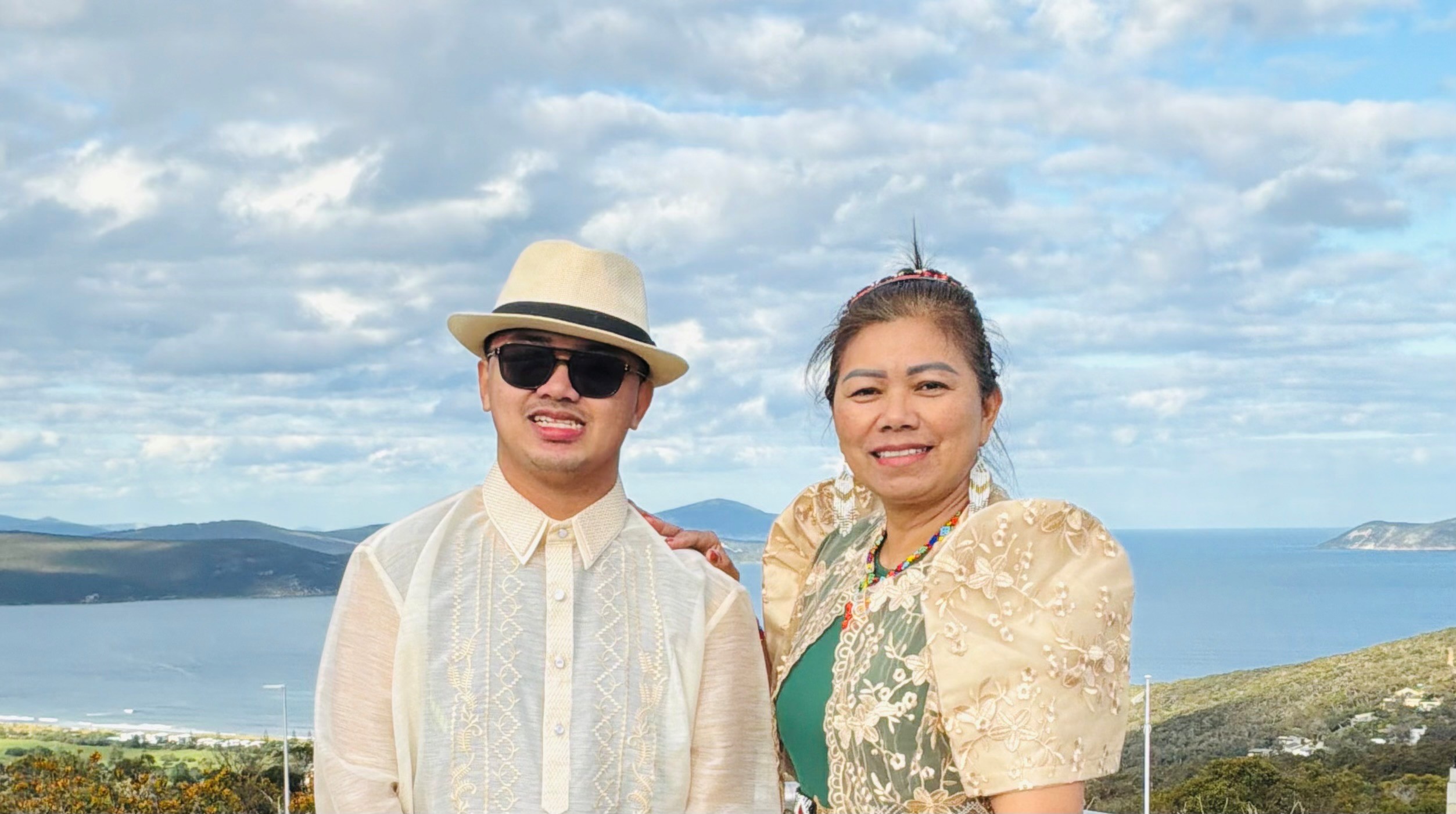
For Janelyn Ocumen, being a carer is not simply a role. It is a lifelong commitment built on love, resilience and hope.
Originally from a remote mountainous region in the southern Philippines, Janelyn is a wife, mother, education support worker, and proud carer to her eldest son, Rudy.
Now 28 years old, Rudy lives with cerebral palsy. He is non-verbal, has limited mobility on his right side, experiences vision impairment, and uses an augmentative and alternative communication (AAC) device to communicate.
Despite the challenges they have faced, Janelyn describes her son as “the most amazing thing that has happened in my life.”
A Journey That Began With Very Few Supports
When Rudy was born, Janelyn and her family lived in a remote and economically disadvantaged area of the Philippines.
Access to medical services was limited, specialist assessments were difficult to obtain, and disability was often poorly understood.
“We were in a very remote place,” Janelyn recalls. “The biggest challenge at that time was financial. We simply couldn’t afford the assessments, therapies and support that Rudy needed.”
To receive a diagnosis, the family travelled seven hours to the nearest city, spending the equivalent of a month’s wages on appointments.
The lack of access was only one challenge.
Janelyn also found herself fighting against stigma and misconceptions about disability.
“When Rudy went outside, people stared. There were cultural beliefs that blamed disability on superstition or wrongdoing. People judged him before they knew his story.”
The experience was deeply painful.
“There were times when we wanted to hide away because it was so hard. But all I wanted was for my son to have the right to exist in the community and be accepted.”
Those experiences became a driving force behind the family’s decision to build a new life in Australia.
Caring Every Day
Today, Janelyn’s caring role includes a wide range of responsibilities.
Some are practical: preparing meals in a way that reduces choking risks, supporting daily living activities, coordinating specialist appointments, navigating systems and services, and managing support arrangements.
Others are less visible.
A major focus is helping Rudy build and maintain independence.
“When your child has a disability, you can fall into the trap of doing everything for them,” she says.
“But then you realise you also need to give them opportunities to do things for themselves.”
Over the years, Janelyn has worked hard to encourage Rudy’s autonomy, celebrating every step forward along the way.
Another important part of her role is ensuring Rudy’s voice is heard.
Because he is non-verbal, communication takes time and patience. Using his AAC device, Rudy types his thoughts and responses, often slowly and carefully.
“My biggest responsibility is making sure people give him the time he needs to communicate.
“He has thoughts, opinions and preferences like anyone else. Sometimes people just need to slow down and listen.”
What People Don’t See
When asked what she wishes more people understood about caring, Janelyn speaks about the invisible nature of the role.
“Being a carer doesn’t come with prior knowledge or structured instructions. You just dive into it because someone you love needs you.”
She describes caring as a constant responsibility that blends physical, emotional and mental labour.
“Caring is defined by a constant, hyper-vigilant but invisible mental, physical and psychological load.”
It involves love and laughter, but also grief, exhaustion, uncertainty and isolation.
While others often describe carers as strong, resilient and selfless, Janelyn is careful to challenge that narrative.
“Carers are not superheroes.
“Even superheroes have support teams. Carers have real emotions. It’s okay to cry. It’s okay to break down. It’s okay to feel overwhelmed.”
For Janelyn, recognising carers as human beings with their own needs is essential.
The Lessons Rudy Has Taught Her
Despite the challenges, Janelyn says caring has filled her life with meaning.
“My son taught me the meaning of unconditional love.”
Over the years, Rudy has helped her develop qualities she never expected.
“He taught me resilience. He taught me courage. He taught me kindness.”
Most importantly, he taught her to celebrate progress in all its forms.
For Janelyn, milestones are not measured by comparison to others. They are measured by the determination and growth she witnesses every day.
She remembers the joy of seeing Rudy walk independently at almost six years old.
She remembers him learning to feed himself using a modified spoon.
She remembers him learning to drive, passing assessments, gaining employment at a museum archive department and continuing to expand his independence.
“Those micro-milestones become the biggest celebrations.
“Every achievement matters.”
Finding Support and Community
After moving to Australia, Janelyn discovered something she had rarely experienced before: support.
She credits services, healthcare professionals, disability advocates and carer organisations with helping both her son and her family thrive.
One of the biggest lessons she learned was that she could not do everything alone.
“The biggest turning point for me was accepting help.”
Through respite services, Janelyn was able to make time for her own wellbeing, knowing Rudy was safe and supported.
“You can rest knowing your loved one is in good hands.”
She also found enormous comfort in connecting with other carers through Carers WA.
Those connections helped her feel less isolated and gave her practical advice for navigating systems such as healthcare, disability supports and financial assistance.
“Sometimes you just need people who understand.
“People you can talk to without fear of judgment.”
Advice for New Carers
Janelyn’s message for people beginning their caring journey is simple:
Ask for help. Accept support. Don’t do it alone.
She encourages new carers to connect with organisations such as Carers WA and Carer Gateway as early as possible.
“It’s okay to accept support and it’s okay to take time to look after yourself.”
She also encourages carers to show themselves the same kindness they show others.
“Looking after your own wellbeing enables you to continue caring for the people you love.”
Janelyn believes it is important to focus on what can be controlled, take challenges one day at a time and celebrate the small wins.
“Take it one day at a time.
“Worrying about the future can create even more pressure. Focus on today and keep going.”
Making Carers Visible
If Janelyn could change one thing, it would be ensuring carers feel seen.
She speaks about what she calls the “paradox of competence” – the idea that the better a carer becomes at managing responsibilities, the less visible their struggles can appear.
“The more capable a carer seems, the easier it is for people to overlook what they’re carrying.”
She wants carers to be recognised as partners in care, included in decision-making and valued for their expertise and experience.
Above all, she wants carers to remember that they matter too.
“There was a time when I thought only my son mattered.
“I didn’t realise my own wellbeing was deteriorating.”
Today, her message is different.
“You matter.”
“How can you care for someone you love if you don’t care for yourself first?”
For Janelyn, caring is an act of love. But it is also an act of courage, advocacy, perseverance and hope.
And every day, she continues to choose it.