Michael
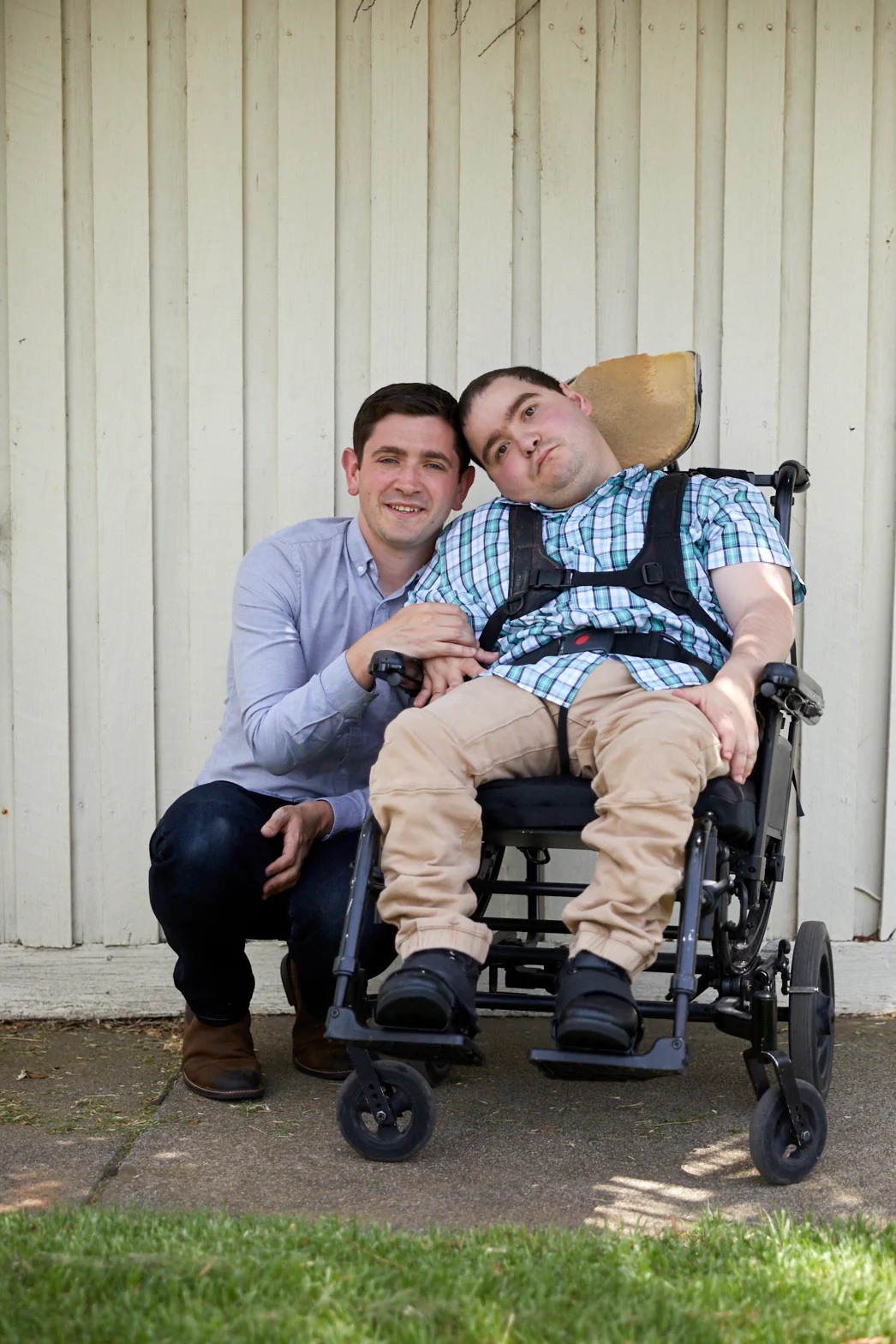
For Michael Casha, caring has never been something separate from being a brother.
Michael has cared for his older brother David for most of his life. David, who is two years older than Michael, has cerebral palsy following an acquired brain injury. He uses a wheelchair, has limited verbal communication, and requires ongoing support with daily living.
“I grew up caring for my brother,” Michael says. “His injury happened when I was quite young, so I don’t really know him any different.”
Now 34, Michael reflects on how his caring role has evolved over the years, from helping as a young child to taking on significant physical and advocacy responsibilities as he got older.
Growing Up as a Young Carer
As a young carer, Michael’s responsibilities extended well beyond what many people expected of someone his age.
As he grew stronger, he helped David with personal care, including getting him in and out of bed, preparing meals and supporting daily activities. He also became an advocate for his brother, attending medical appointments and helping ensure David’s needs were understood.
But despite the significant responsibilities he carried, Michael often felt his role wasn’t recognised.
“Being taken seriously was a challenge,” he says.
“I literally got my brother in and out of bed. I would give him medication and feed him. But I don’t think people recognised the role I played.”
That lack of understanding sometimes meant missing out on support, particularly at school.
“There were times when I asked for help through schooling and I don’t think people recognised just how significant my caring role was.”
He also found that medical professionals would sometimes exclude him from conversations because of his age.
“They were trying to shield me, but given the role I played, not having access to information was actually quite difficult.”
A Caring Role That Changed, But Never Ended
A year ago, David moved into Supported Disability Accommodation, where he now lives with two other people and receives support from disability support workers.
For many people, moving out of the family home might appear to signal the end of a caring role. For Michael, it simply changed.
“I don’t know if it’s part-time care,” he says. “I think it’s just a very different dynamic.”
These days, Michael’s caring role focuses less on physical support and more on advocacy, administration and decision-making. He helps manage David’s finances, oversees his banking, and supports him through medical appointments and hospital visits.
Most importantly, he continues to think about his brother and his wellbeing every day.
“The similarities are still there around thinking of him and caring about him all the time.”
Michael says one of the challenges carers often face is that their role can become invisible when it doesn’t fit traditional ideas of caring.
“I was never considered formally a carer in some of the support structures that existed because my mum was identified as the primary carer.”
He believes caring should be recognised as a family effort.
“It’s important to recognise a family caring unit and the different levels of caring that are provided.”
Finding Space to Be Brothers
While caring remains part of their relationship, David’s move into supported accommodation has created opportunities for something Michael deeply values: simply being brothers.
“That’s been one of the best things about him moving out,” he says.
When they spend time together now, more of that time is social rather than focused on day-to-day care tasks.
“We’ll meet up for lunch, or spend time together socially.”
Those moments were often difficult to find when so much time and energy was devoted to meeting David’s immediate care needs.
“When we spent so much time physically and mentally caring for him, finding the extra effort to go out for lunch, go to the movies or spend time together socially was a little bit difficult.”
The change has allowed their relationship to grow in new ways while maintaining the strong bond they’ve always shared.
The Reward of Seeing Someone Thrive
When asked what he finds most rewarding about caring, Michael doesn’t hesitate.
“I can’t tell you how much I adore the genuine positive impact I have on my brother.”
He describes the joy of helping David participate in the things that matter to him, even when doing so requires extra planning and effort.
Getting to an event might mean arranging accessible transport, locating suitable parking and navigating logistical challenges many people never need to consider.
But seeing the result makes every effort worthwhile.
“When you get him there and you see the life of the party that he is, and the joy it brings other people, and the smile on his face, it’s the best.”
For Michael, caring is ultimately about helping David live the fullest life possible.
The Importance of Carer-Friendly Workplaces
As Michael entered adulthood, a new challenge emerged: balancing caring responsibilities with work.
Finding an employer who genuinely understood caring made a significant difference.
“Flexible working was incredibly important to me,” he says.
Because caring responsibilities can be unpredictable, Michael needed a workplace that would allow him to adjust his hours or take leave when required without limiting his professional growth.
Many carers face difficult choices between career progression and caring.
“I’m grateful that support has been there for me so I can do both, because I want to do both.”
Having flexibility means Michael can attend appointments, respond when his brother needs support and continue building a meaningful career.
It also means, as he puts it, being able to remain both a carer and a brother.
What Michael Wishes More People Understood
Michael believes one of the biggest misconceptions about caring is how invisible it can be.
“The role they play is often hidden. It’s behind closed doors.”
People may not see the physical tasks, emotional labour or constant mental load that caring can involve.
“It’s the brother who goes to school and you think they’re on the playground having fun, but actually they’ve had a really stressful morning and they’re worried about their sibling all day.”
He also wants people to recognise the strengths carers develop through their experiences.
Carers often gain exceptional skills in communication, problem-solving, resilience, empathy and working under pressure.
“It’s a unique skill set that people may not know carers have.”
Advice for New Carers
If Michael could offer one piece of advice to someone just beginning their caring journey, it would be simple:
Ask for help – and accept it.
Like many carers, he initially felt guilty seeking support.
“You can feel guilty accepting help for yourself because you feel like you’re taking that away from the person you care for.”
Over time, he realised that receiving support made him a stronger and more sustainable carer.
“If you don’t accept help, you can’t help the person that you care for.”
He encourages carers to connect with local carer organisations, as well as friends, family and workplaces that can provide understanding and support.
Recognising Carers for Who They Are
If Michael could change one thing, it would be greater understanding of carers and the roles they play.
“They want to be a mum, a dad, a brother, a sister, a friend, a son or a daughter.”
Caring is often woven into relationships built on love, family and connection. While it can be challenging, carers continue to show up every day because they want the best for the people they care about.
For Michael, caring isn’t separate from being David’s brother. It’s one of the ways he expresses that relationship.
And after more than three decades of caring, that remains at the heart of his story.